You have probably tried at least one productivity hack that worked brilliantly for exactly four days before your calendar fell apart again. If you have been switching between planning methods, wondering why nothing quite sticks, the real answer might simply be that you are comparing the wrong things. The time blocking vs task batching debate confuses a lot of people, mostly because both methods promise the same outcome through very different approaches.
Here is what makes this genuinely worth understanding properly. Once you know how each method actually works and which one suits your specific type of work, productivity stops feeling like guesswork. In this blog, we will break down what time blocking and task batching really mean, how they compare in practice, and which one, or combination, is likely to work best for your actual workday.
What Time Blocking Actually Means
Time blocking is the practice of assigning specific chunks of your calendar to specific tasks or types of work. Instead of a loose to-do list, your day is divided into visible blocks, like nine to ten for emails, ten to twelve for deep work, and two to three for meetings.
The core idea behind time blocking is simple: if a task does not have a dedicated slot on your calendar, it is far less likely to actually get done. It forces intentionality around how your hours are spent, rather than reacting to whatever feels urgent in the moment.
What Task Batching Actually Means
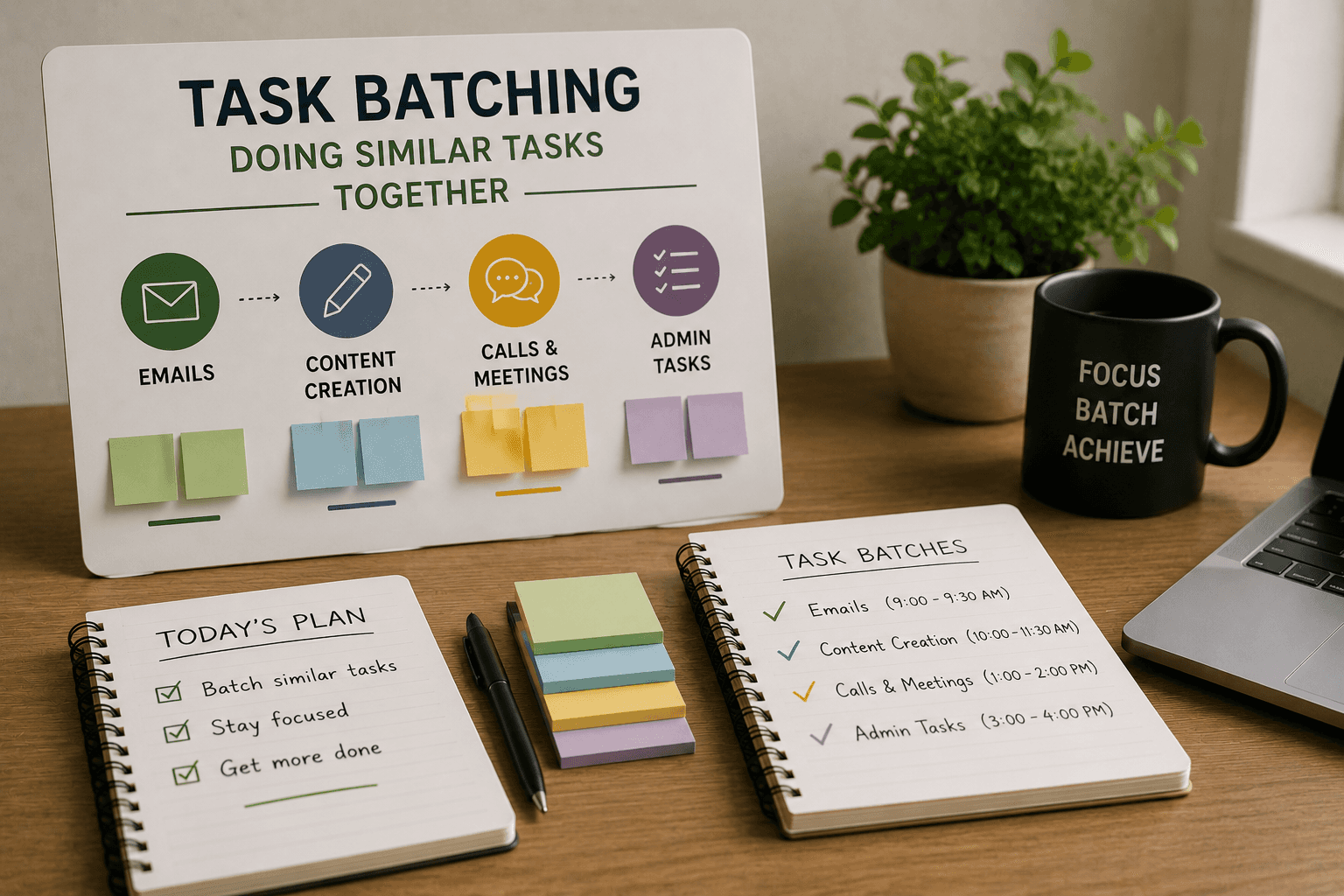
Task batching, on the other hand, groups similar tasks together and tackles them in one continuous stretch, regardless of when exactly that stretch happens during the day. Instead of answering emails throughout the day in small bursts, you batch them into a single 30-minute window. Instead of switching between writing, calls, and admin work randomly, you batch similar activities together.
The core idea behind task batching is reducing context switching, since jumping between very different types of tasks quietly drains focus and time, even when each individual task feels small.
Time Blocking vs Task Batching: The Real Comparison
Both methods are genuinely effective, but they solve slightly different problems, which is exactly why comparing them directly matters.
Structure versus flexibility: Time blocking gives your entire day a fixed structure, while task batching only structures similar tasks, leaving more flexibility around timing.
Best for deep, focused work: Time blocking works exceptionally well for protecting large chunks of uninterrupted time, ideal for writing, strategy, or complex problem solving.
Best for repetitive, similar tasks: Task batching shines when you have several small, similar tasks, like replying to messages, reviewing documents, or scheduling calls.
Mental energy required: Time blocking demands more upfront planning and discipline to stick to the schedule, while task batching is often easier to adopt gradually.
Flexibility during unpredictable days: Task batching adapts more easily to disrupted schedules, since batches can shift without unraveling an entire day's plan.
Long-term sustainability: Time blocking can feel restrictive if applied too rigidly, while task batching tends to feel more sustainable for people with unpredictable workloads.
In the time-blocking vs. task-batching comparison, neither method is objectively superior; they simply serve different kinds of work and working styles.
Which One Should You Actually Use
Rather than choosing one method permanently, the smartest approach for most working professionals is to combine both strategically.
Use time-blocking for your most important, high-focus work, ideally during your natural peak-energy hours.
Use task batching for smaller, repetitive tasks like emails, approvals, or admin work, grouped into one or two windows a day.
Leave a buffer block unscheduled each day, since rigid time blocking without flexibility often collapses the first time something unexpected comes up.
Review weekly which tasks genuinely needed a dedicated block versus which ones could have simply been batched together.
Start small, applying either method to just one or two hours a day before restructuring your entire schedule.
This combined approach usually outperforms picking a single method and forcing every type of work into it.
Where WebVeda Fits Into Building Real Productivity Habits
Understanding time blocking vs task batching is useful, but building the discipline to actually apply either method consistently is a different skill altogether. This is where WebVeda becomes genuinely useful for working professionals trying to reclaim control over their day.
WebVeda offers practical, expert-led courses under the Productivity category, covering time management, focus, and workflow systems, taught by people who have actually managed demanding schedules themselves, not generic theory. If you are ready to move beyond trial and error and build a system that genuinely fits your work, WebVeda's productivity courses are a practical place to start.
Conclusion: The Right Method Depends on the Work, Not Willpower
The time-blocking vs. task-batching debate is not really about finding a single winner; it is about matching the right method to the right kind of work. Time blocking protects your focus for deep work, while task batching keeps smaller tasks from quietly draining your day. Most professionals benefit from using both deliberately, rather than forcing their entire schedule into a single system. Learning how to manage your time more effectively at work can make it easier to apply both approaches consistently.
If you are ready to build a productivity system that actually fits your workday, explore WebVeda's courses today and start working with a method that finally sticks. Students can also manage your time better as a student by learning practical strategies for organizing priorities, study sessions, and daily responsibilities.
Frequently Asked Questions
1. What is the main difference between time blocking and task batching?
Time blocking assigns specific calendar slots to specific tasks, while task batching groups similar tasks together and completes them in one continuous stretch, regardless of exact timing.
2. Which method is better for deep focus work?
Time blocking is generally more effective for deep-focus work, since it protects a dedicated, uninterrupted stretch of time for complex or high-concentration tasks.
3. Can time blocking and task batching be used together?
Yes, and combining both often works best. Time blocking can protect focus time for important work, while task batching handles smaller, repetitive tasks like emails or admin work efficiently.
4. Is task batching better for people with unpredictable schedules?
Generally yes, since task batching offers more flexibility around exact timing compared to the fixed structure of time blocking, making it easier to adapt to disrupted days.
5. How do I start using these productivity methods without feeling overwhelmed?
Start small by applying one method to just one or two hours a day, then gradually expand once it feels manageable, rather than restructuring your entire schedule at once.
Recent Blogs

Career Growth
Learn how to switch careers with no experience: test a new field.
Read more


Startup
Learn how to build a startup pitch deck investors actually read
Read more

Money & Investing
Work out how much money you need to retire in India with a simple 5-step method
Read more

Money & Investing
Retirement planning in India, simplified for your 20s and 30s here
Read more