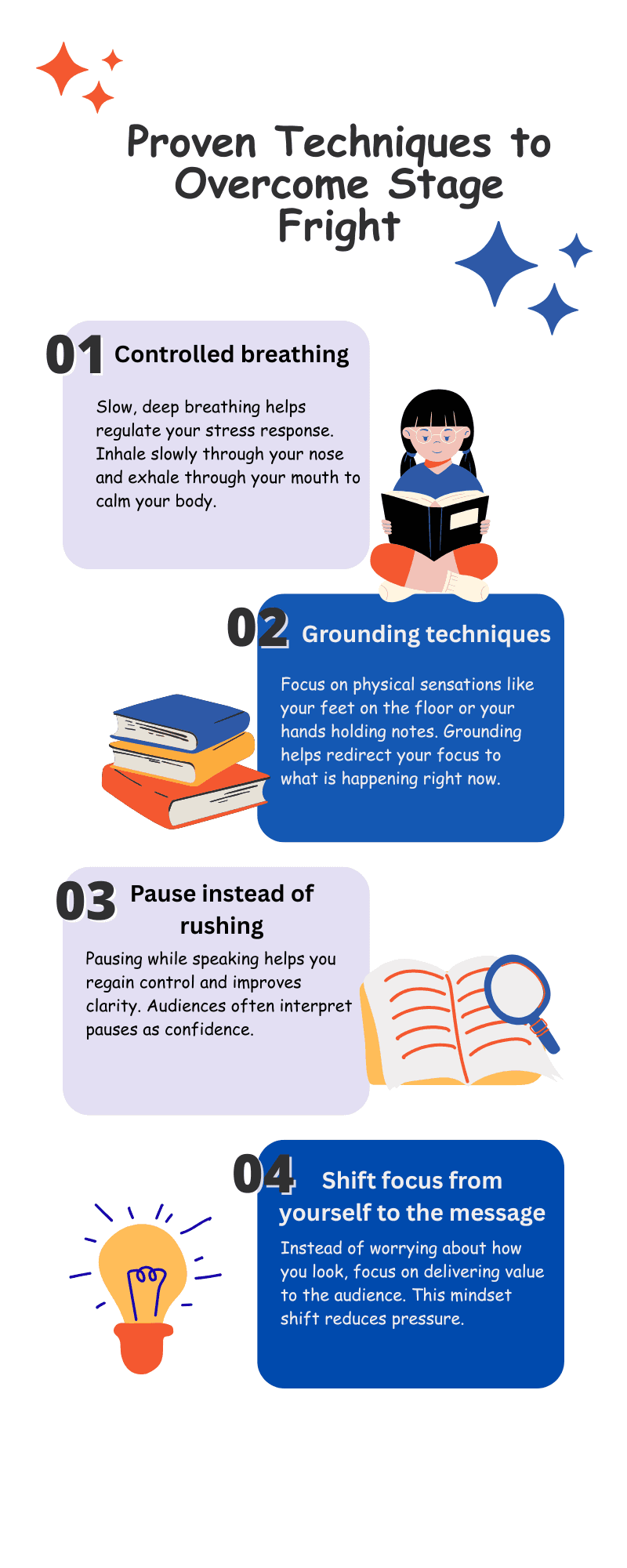




Stage fright is one of the most common challenges people face when speaking in front of an audience. Whether it is a classroom presentation, a work meeting, or a public event, the fear of being judged often leads to nervousness, a shaky voice, and loss of confidence. Many people assume this fear will disappear on its own, but without the right approach, stage fright can become a major communication barrier that affects clarity and overall performance. Strengthening your speaking abilities through structured learning, such as an effective communication skills course, can play a key role in overcoming these challenges.
The good news is that stage fright is not a permanent condition. With proper preparation, emotional regulation, and consistent practice, anyone can learn to manage it effectively. This guide breaks down what causes stage fright, how it affects confidence, and why the importance of communication skills becomes even more critical when speaking under pressure, along with techniques that help you speak with calmness and control.
Click the video and take your first step towards clearer, more confident public speaking. It will help you to understand how to speak clearly, manage nervousness, and connect better with an audience, while also building essential skills through freelance mastery.
How Stage Fright Affects Your Communication and Confidence
Stage fright directly impacts how you express ideas and connect with your audience. When fear takes over, your stress response activates, making it harder to think clearly, articulate thoughts smoothly, and speak naturally. Many people struggle to improve their articulation skills under pressure, which further affects message clarity.
Ways stage fright affects communication
Reduced eye contact and weak audience engagement
Rushed or unclear speech delivery
Forgetting key points during presentations
Tense posture, closed gestures, and other nonverbal communication signals that reduce impact
Lower confidence during professional or academic speaking
Over time, repeated experiences with stage fright can create avoidance behaviour. People begin skipping opportunities that involve speaking, which limits personal growth and the development of active listening skills that are essential for strong two-way communication. Becoming aware of these impacts is the starting point for meaningful improvement.
Common Symptoms of Stage Fright You Should Know
Understanding the symptoms helps you manage them better. Stage fright affects both the mind and the body, often at the same time.
Physical symptoms
Rapid heartbeat
Dry mouth
Sweaty palms
Shaky voice
Tight shoulders or jaw
Mental and emotional symptoms
Fear of making mistakes
Overthinking audience reactions
Self doubt before speaking
Difficulty concentrating
These responses occur as part of the body’s normal reaction to stress. They are not signs of weakness. Learning how to calm the body and mind helps reduce their intensity, and developing overall confidence through a career development course online can further support this progress.
How to Prepare for a Speech or Presentation Effectively
Preparation is one of the strongest ways to reduce stage fright. When you feel prepared, your confidence increases automatically.
1. Structure your content clearly
Organize your speech with a clear opening, main points, and conclusion. Simple structure improves communication clarity and reduces anxiety.
2. Practice out loud, not just in your head
Speaking aloud helps train your voice and timing. It also helps you identify areas where you may hesitate. This habit is especially valuable when building strong communication skills for interviews, where clear delivery and confidence matter most.
3. Use visualization exercises
Visualize yourself speaking calmly and receiving positive reactions. Visualization exercises help rewire fear based thinking patterns.
4. Practice vocal warm-up techniques
Simple vocal warm-up routines improve voice control and reduce tension. This is especially helpful before presentations.
5. Rehearse in similar conditions
Practice standing up, using slides, or holding notes the same way you will during the actual presentation. This builds familiarity and comfort.
Consistent preparation reduces uncertainty, which is a major trigger of stage fright.